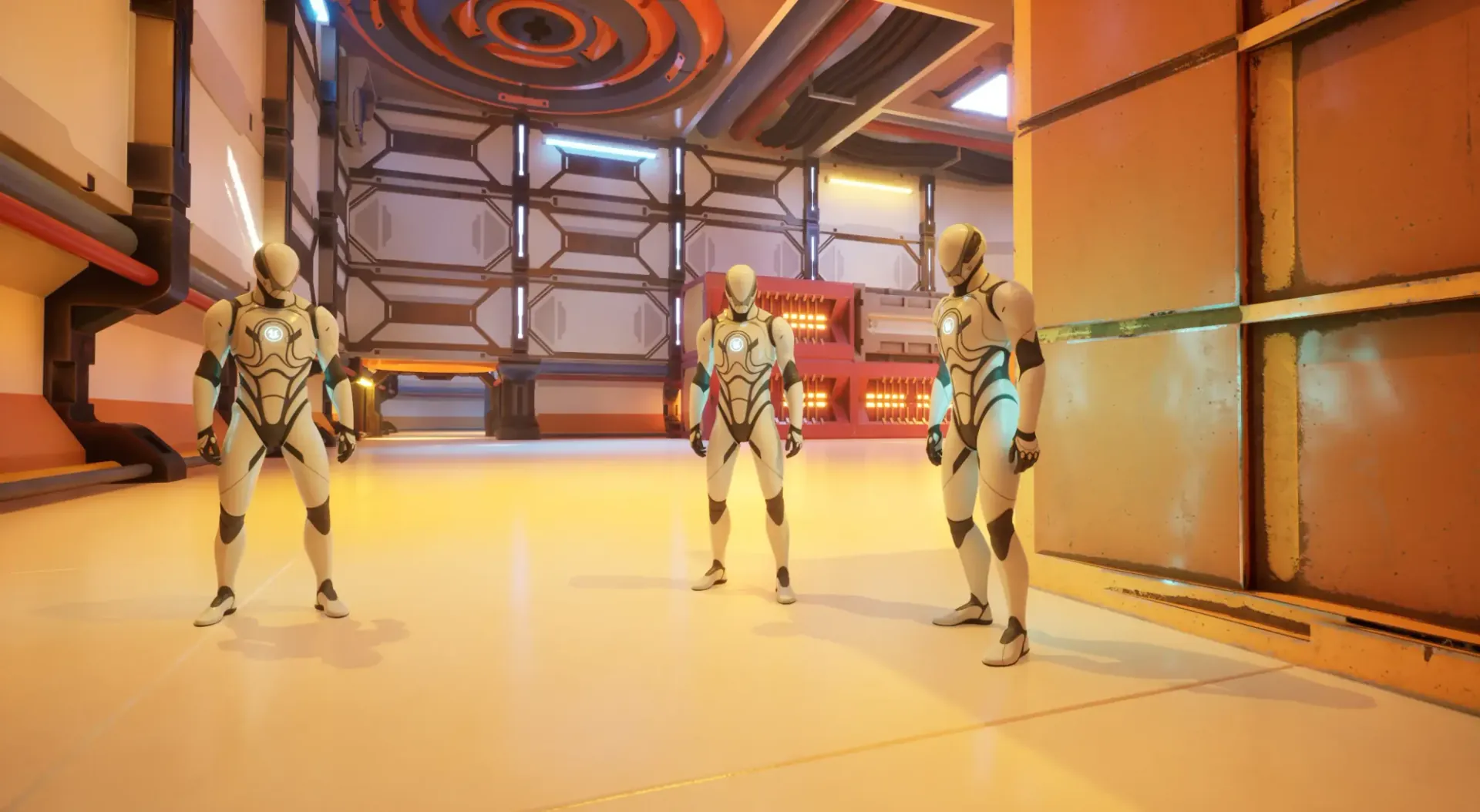
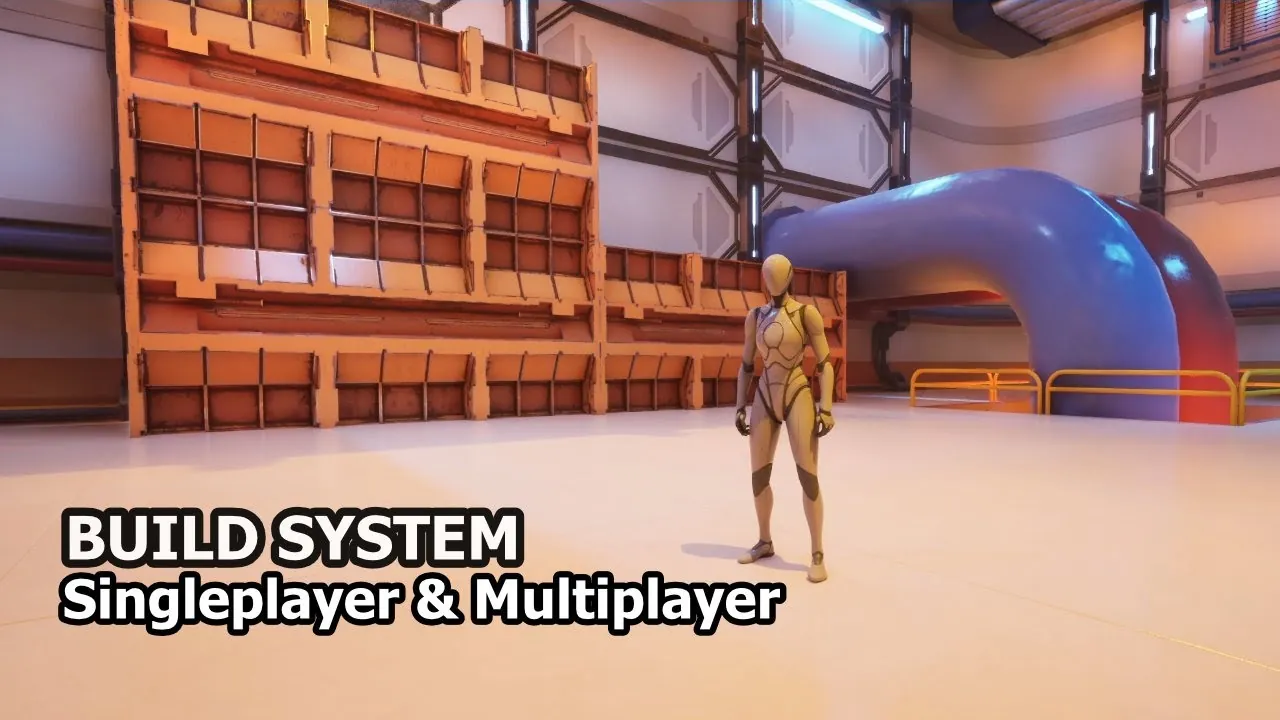
Procedural levels work in multiplayer when every machine builds the same level from the same seed. Dungeon Architect's Build System does exactly that in Unreal Engine: the server picks the seed and sends it to every client, each client builds the identical dungeon locally, and players spawn once everyone is ready. Nothing but the seed goes over the wire, late joiners catch up, and dedicated servers build the same world on the CPU.
THE MULTIPLAYER SAMPLE · SAME DUNGEON ON EVERY MACHINE
One seed, the same level everywhere
The same seed always gives the same level, on every machine. That’s what makes networked procedural levels practical: instead of replicating thousands of meshes, the server replicates a number.
The Build System handles the whole sequence:
The server builds the dungeon and sends its seed to every client.
Each client builds the exact same dungeon locally from that seed, over several frames.
Players wait as spectators, or in a lobby, while their local build runs.
Everyone spawns once their copy is ready. Players who join late build the dungeon that is already running, then join in.
It’s three components: one is already on every dungeon actor, and the other two go on the game mode and player controller you already have. Nothing in your class hierarchy changes.
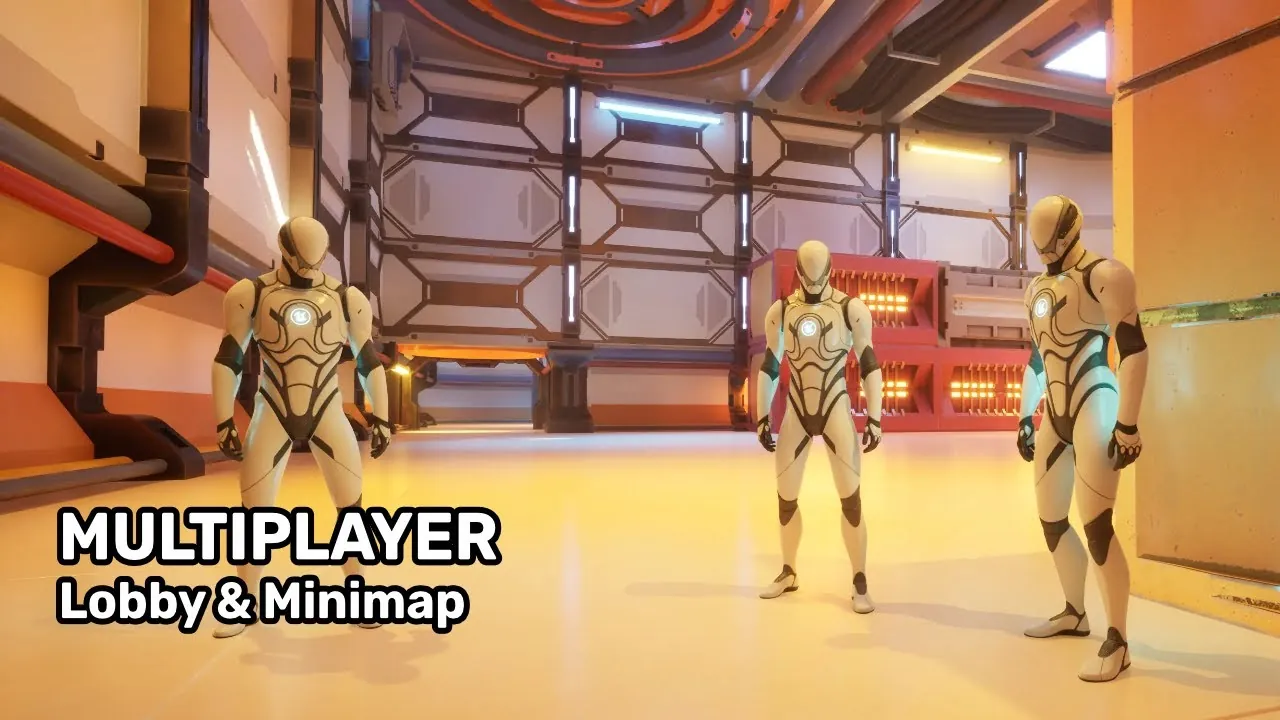
Video · Build System: make your dungeon playableVideo · Lobby, server browser & late join
Since 3.7, tag a Player Start with Lobby and players wait there while their dungeon builds, then move into it once it’s ready. Set a Lobby Pawn Class to let them walk around instead of spectating.
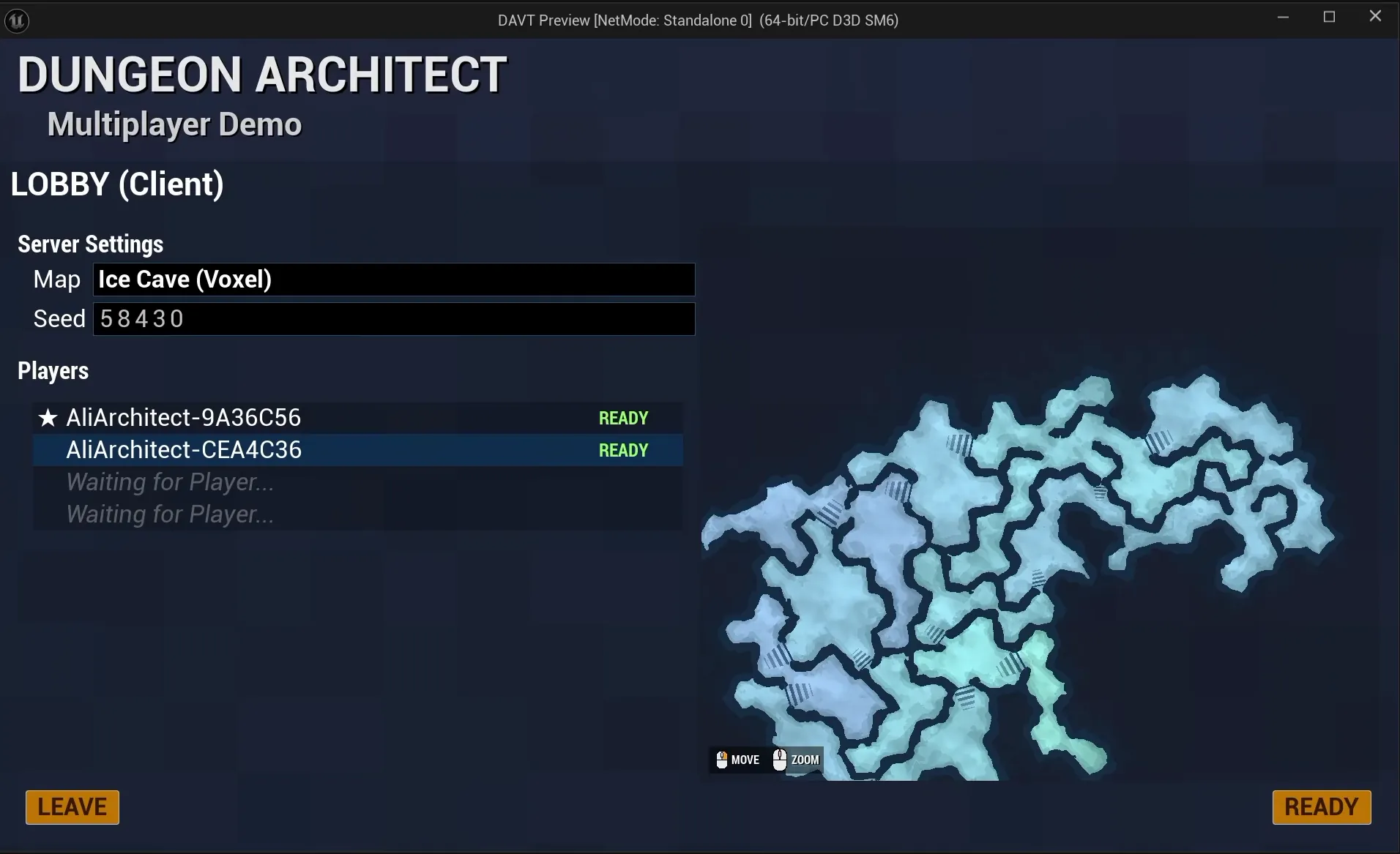
The multiplayer sample goes further: a server browser and lobby where the host picks the seed and every client sees the new layout preview in real time. The preview builds only the layout, with no meshes spawned, and draws it with the Canvas minimap framework.
Lobby · the host's seed, previewed on every client
Dedicated servers
Dedicated servers work, voxel caves included. Voxel density is generated on the GPU by default, and dedicated servers have no renderer, so they automatically fall back to a CPU path that runs the same density math. The server builds the same world as its clients, with no configuration. See Voxel worlds on dedicated servers.
A new dungeon mid-match
Since 3.6, players can pick and build a new dungeon mid-game, from a button or any UI you like, driven by Blueprints. The Build System rebuilds it on every machine, and an option skips the automatic player restart for games that rebuild while players keep control of their pawns.
Layouts built for multiplayer
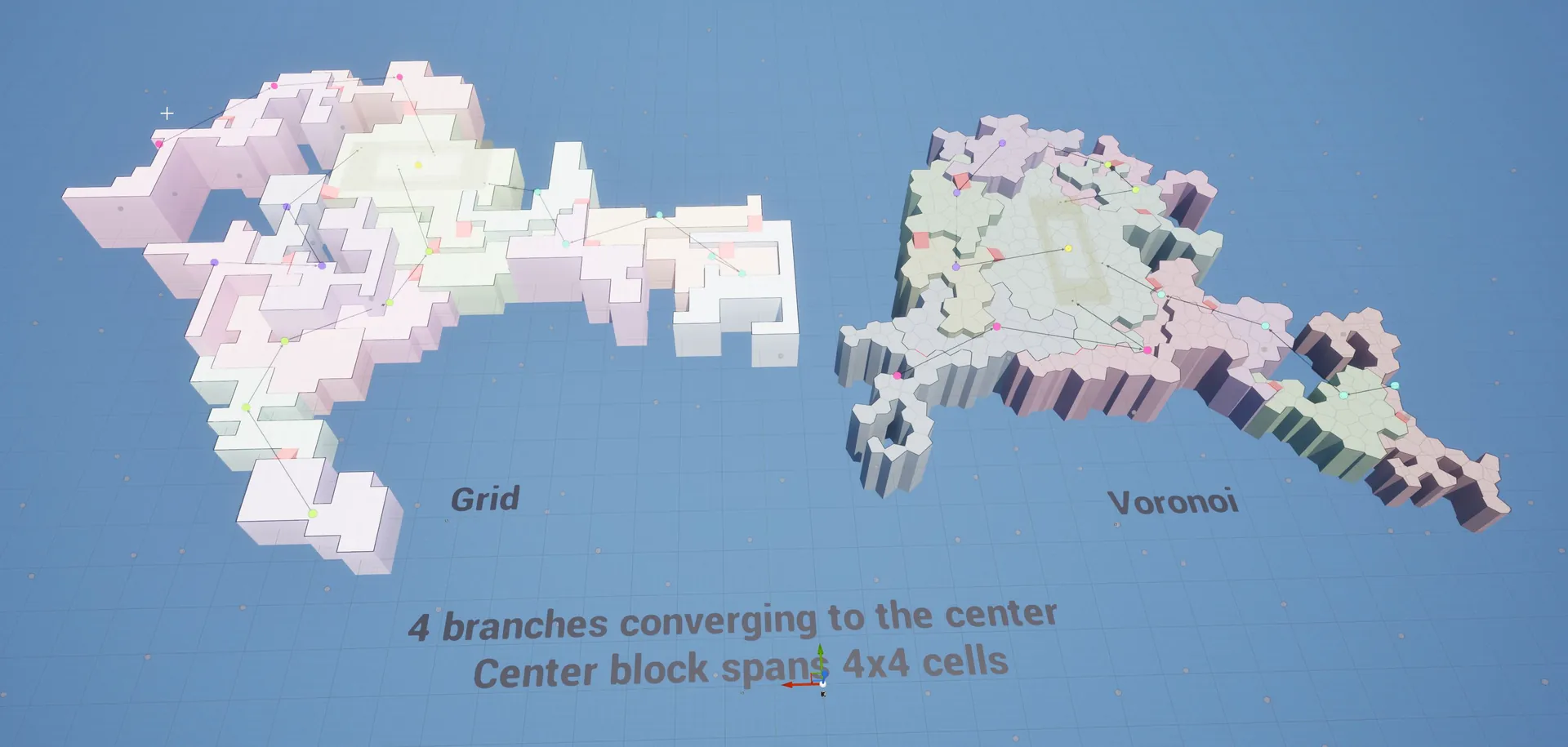
Single-player dungeons run from an entrance to a boss. Multiplayer maps often don’t. Since 3.7 the flow builders (Snap Grid Flow, Grid Flow and Cell Flow) can grow standalone paths with no main path at all, such as four team spawns converging on a central arena. Keys and locks can be placed on maps with multiple spawns, and Reachability Contracts on the Finalize node list the routes a finished map must keep open.
Four branches converging on the center · grid and Voronoi
Snap Grid Flow, which stitches your own hand-built rooms on a 3D flow graph, replicates its actors correctly and supports multiple floors and level streaming.
Fog of war, per team
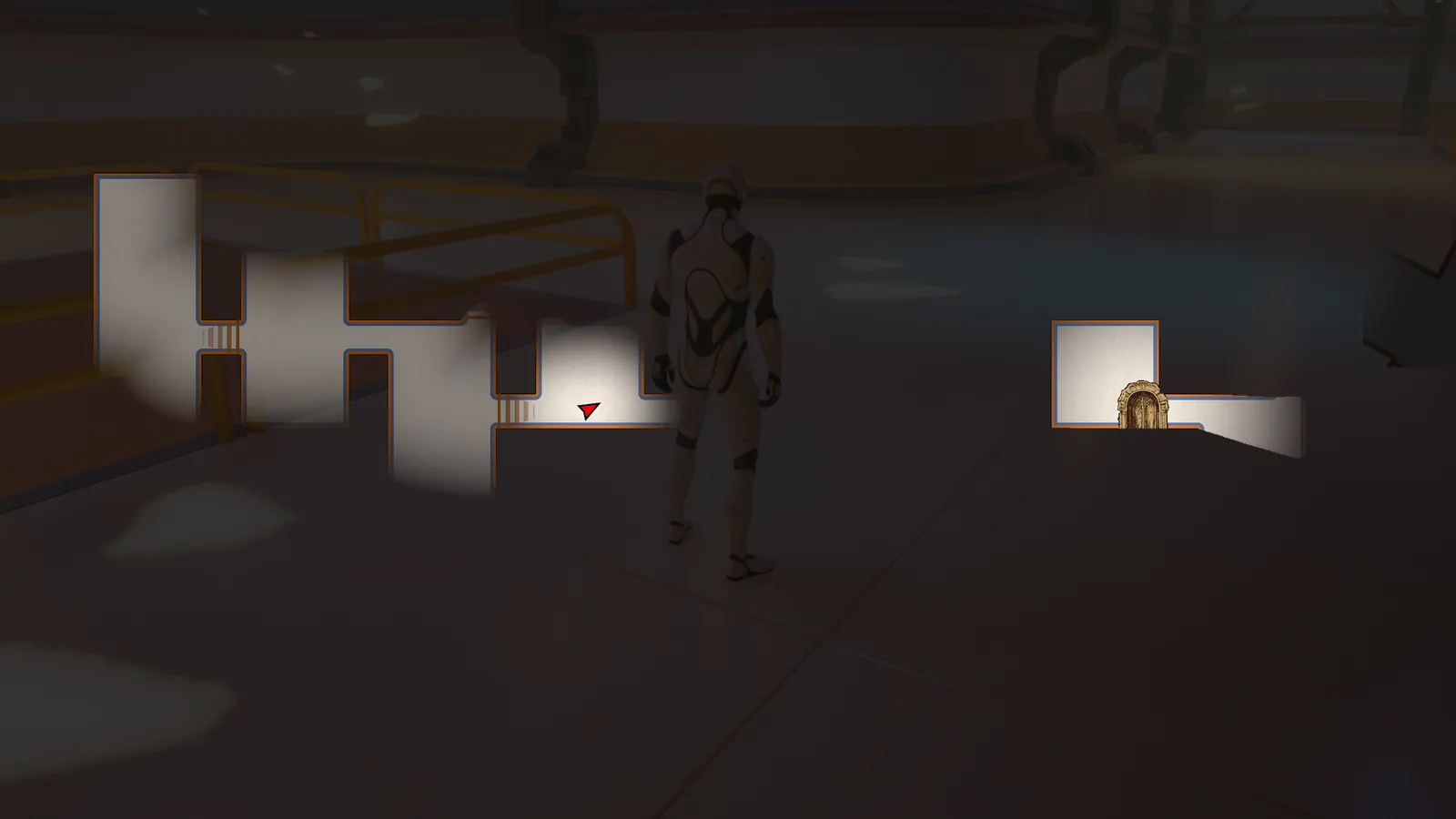
The Canvas minimap draws the generated level with fog of war. Fog Of War Share Mode picks who sees whose exploration: free for all, per team, or everyone. Any actor can carry its own map icon and reveal fog around itself with the Dungeon Canvas Item component.
Canvas minimap with fog of war
The multiplayer sample
A complete networked sample ships with the plugin: a server browser, a lobby with a synced minimap preview, the dungeon built on the server and on every client from the same seed, players held while their build runs, and late join. The session and lobby code is a reference implementation, there to be read and copied from. Open it from the Launch Pad, or read the multiplayer sample docs.